Hello everyone, today XM brings you "USD/JPY Price Analysis and Forecast: Economic Risks from Tensions in Iran May Limit Yen Strength". We hope it helps you! Original content is as follows:

The xm平台操作指南USD/JPY pair fell sharply below the round level of 160.00, despite pressure on the Japanese yen from rising economic risks linked to escalating tensions in the Middle East.
The decline was driven by increased expectations of possible currency intervention by Japanese authorities to curb further yen depreciation. Earlier on Tuesday, the Bank of Japan kept its key interest rate at 0.75%, but the decision was accompanied by a split vote (6–3). Three board members voted in favor of tightening policy, and inflation forecasts were revised upward, keeping the possibility of a rate hike in June or July.
However, the initial support for the yen proved short-lived. The market remains concerned about Japan's economic outlook amid disruptions to supply chains through the Strait of Hormuz. In recent weeks, shipping through this strategic route has significantly declined due to restrictions imposed by Iran, as well as a naval blockade of Iranian ports by the United States. On Wednesday, U.S. President Donald Trump confirmed that the blockade would remain in place until Iran agrees to the proposed deal conditions.
Additional pressure came from statements by Japanese officials. Finance Minister Satsuki Katayama signaled readiness for decisive action in the foreign exchange market, while chief currency diplomat Atsushi Mimura noted coordination with the United States under the agreement reached last September. These signals triggered intraday short-covering in the yen.
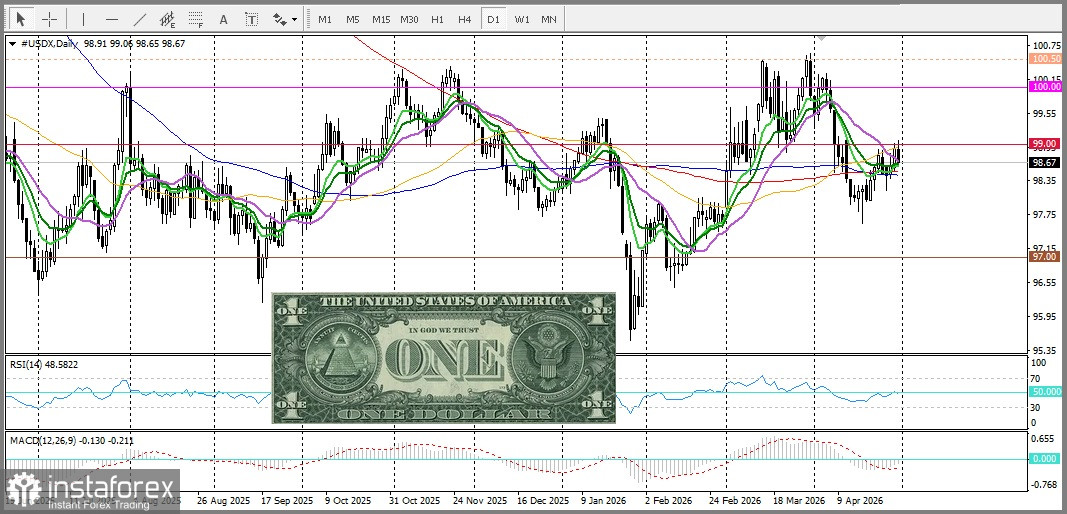
At the same time, the U.S. dollar retreated from the highs reached on April 13, which contributed to a sharp decline of more than 100 points in USD/JPY from the 160.70–160.75 level. However, a significant weakening of the dollar appears unlikely. Geopolitical tensions remain elevated, and negotiations between the U.S. and Iran have reached an impasse. Donald Trump rejected Iran's proposal to end the conflict, stating that an agreement is only possible if Tehran abandons its nuclear program, and confirmed the continuation of the naval blockade.
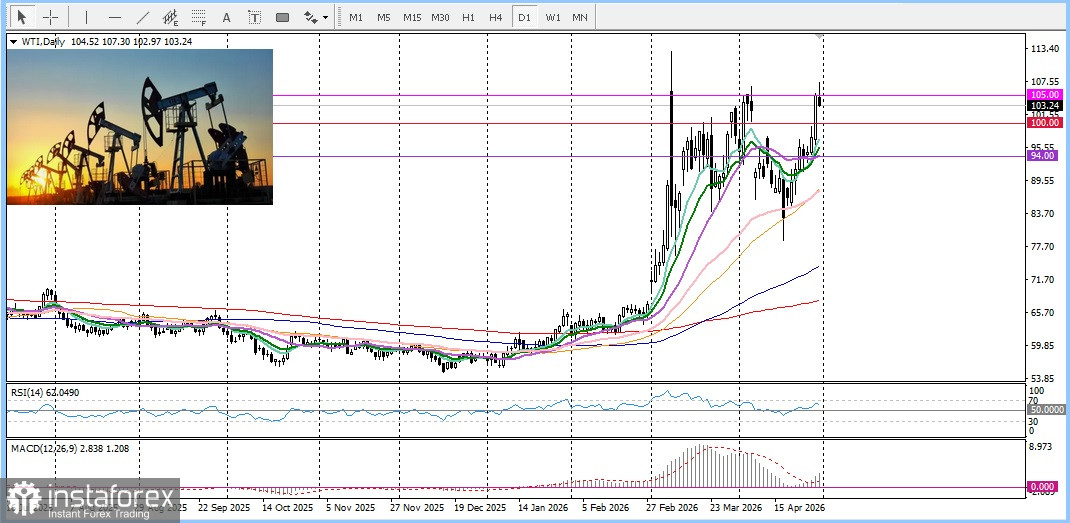
This environment continues to support high oil prices, increasing inflationary risks.
An additional factor is the Federal Reserve's hawkish stance. The regulator kept the interest rate in the 3.50%–3.75% level, with dissenting votes reaching their highest level since 1992: three members opposed a more dovish tone. In response, markets revised expectations, significantly reducing the probability of policy easing in 2026 and even pricing in more than a 10% chance of a rate hike, which supports the dollar.
Given the current fundamental backdrop, it is too early to speak of a short-term top forming in USD/JPY. A clearer downward trend is required to confirm a reversal. Traders are now focused on upcoming U.S. macroeconomic releases, including preliminary Q1 GDP data and the Personal Consumption Expenditures (PCE) index, which may set the direction for the pair during the North American session.
From a technical perspective, the pair has fully erased yesterday's gains but remains resilient below the 159.00 round level. If prices fall below this level, the next support lies at the 50-day SMA in the 158.50–158.60 level. However, as long as oscillators remain positive, bulls may still attempt to defend positions. The Relative Strength Index (RSI) is also close to neutral, indicating weakening bullish momentum. If it moves into negative territory, bears will gain the advantage.
The above is all about "USD/JPY Price Analysis and Forecast: Economic Risks from Tensions in Iran May Limit Yen Strength", carefully edited by the XM team. Thank you for your support!